

Cargo crane failures may appear sudden, but where the cause is a lack of maintenance, the warning signs were almost always there. A wire rope that parts, a slew ring that seizes, a brake that fails to hold, the sudden uncontrolled movement; these are rarely bolts from the blue. They are the end point of a process that began weeks, months, or years earlier, when something small was missed, deferred, or simply never looked for.
Ship’s cranes occupy an unusual position in the maintenance landscape. They are not fixed offshore installations with dedicated technicians and rigorous permit-to-work systems. They are not shore-based cranes with a single owner and a consistent maintenance contractor. They are frequently serviced by local contractors in whichever port the vessel happens to call, often without support from the original equipment manufacturer (OEM), and often to a scope defined by whoever is placing the order rather than whoever understands the equipment. A scope of work completed exactly as requested does not protect the owner if the scope itself was inadequate.
Before procedures, before checklists, before inspection intervals - you need a maintenance strategy. Your strategy defines what you are trying to achieve and why. Procedures, job plans, work instructions are simply the means of delivering it.
An effective maintenance strategy for cargo cranes should, as a minimum, address the following:
Procedures that are current and suitable - Maintenance procedures should reflect the actual equipment on board, the environment in which it operates, and the standards it is expected to meet. Generic procedures applied to specific equipment are better than nothing, but only just. Use established references and standards, such as ISO 4309 for wire rope management and OEM recommendations for slew rings, to build up robust procedures.
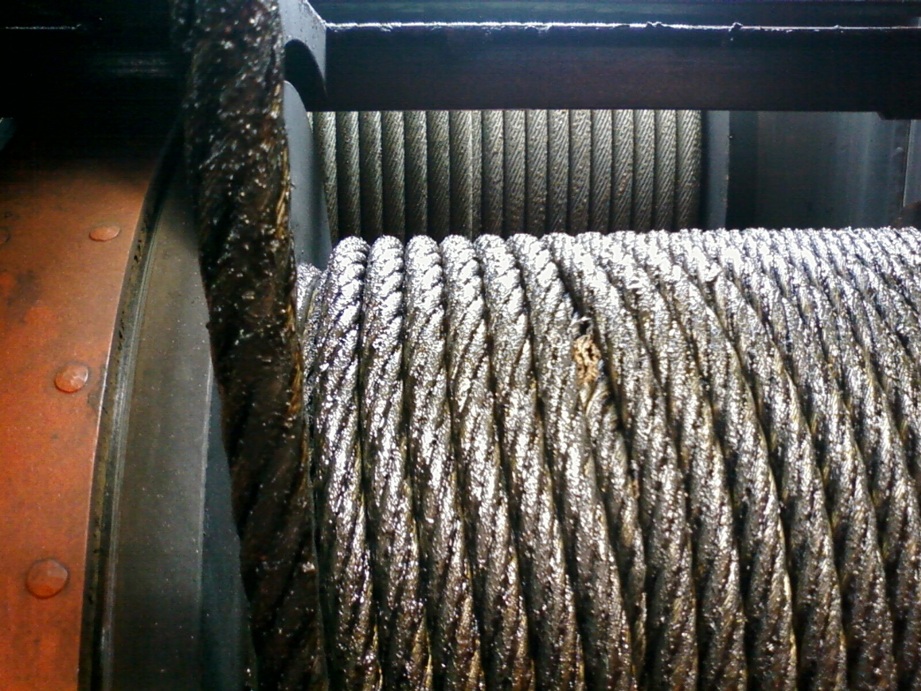
Identification of safety critical components - Not all components carry equal risk. Safety critical components, wire ropes, slew ring bearings, brakes, structural members, safety devices and limit switches, need to be explicitly identified, with defined inspection criteria and clear discard or rejection standards.

Competent operators - The person operating the crane should have sufficient understanding of their equipment, including its limitations, controls, and warning signs. Operational competence is not the same as holding a certificate. It requires genuine familiarity with the specific equipment and, critically, knowing when to stop and escalate an issue.
Annual inspection by a competent person - Ships’ cranes should be inspected at least annually by a person with the equipment-specific knowledge to identify deterioration that a routine maintenance crew may not recognise. This is not a class survey. It is a technical inspection.
Slew ring condition monitoring - Rocking motion checks (measuring the play in the slew ring bearing under controlled conditions) are a straightforward and underused early indicator of bearing wear, backed up with grease sampling and analysis. If you are not doing these, you are flying blind on one of the most safety critical and costly components on the crane.
Structural condition and asset integrity - Cracks, corrosion, weld failures, and deformed members do not repair themselves. A crane that looks serviceable from the operator’s seat may be significantly compromised at connection points and high-stress areas that nobody is routinely examining. The slow march of corrosion and structural deterioration often gets normalised until the structure is compromised.
Safety devices and limit switches - These need to be tested and not just assumed to be functional. An emergency stop that has never been tested is not a safety device. It is a label.
Don’t get punched by your punch list - A punch list (Snag list or Outstanding Works list), that just sits there, unread and unassessed, isn’t a management tool; it’s a list of things waiting to go wrong. Read every item, assess it properly, and put the right actions in place to close it out, rather than letting it roll forward from one survey to the next.
Running repairs - Not everything that goes wrong requires the crane to come out of service. But running repairs need to be assessed by someone with the technical knowledge to determine whether the repair is genuinely acceptable or whether it is simply deferring a larger problem.
Maintenance records that mean something - A tick in a system is not a maintenance record. A genuine record contains enough information to tell you what was found, what was done and by whom. If your records cannot answer those questions, they are not records; they are paperwork.
Internal audit of your management arrangements - The system itself needs to be audited periodically, not just the equipment. Are your procedures being followed? Are defects being reported? Is the maintenance contractor actually delivering what the scope requires?
Records, history, and consistency of reporting - Good crane management leaves a trail. Not just records of what was done, but a consistent pattern of findings over time. Showing that inspections are being carried out to the same standard, by people who know what they are looking for, and that the results are being tracked. Repeatability and consistency of reporting are indicators of a functioning system. If your inspection reports all look identical, that is not reassurance; it is a warning sign.
Meeting the minimum standard is one thing. Understanding what genuinely good crane management looks like is another, and the gap between the two is often where incidents occur, but if you want to take it to the next level, then consider the following:
Performance baseline - Having a documented performance baseline is critical for understanding if your crane is not operating as expected through either a noticeable step change in performance or, often more difficult to detect, gradual deterioration. It also removes the subjective element from post maintenance reinstatement.
Sweat the small stuff! - Evidence that minor defects are being identified and managed is one of the most reliable indicators of a healthy maintenance culture. Weeps and seeps, small corrosion patches, minor seal leaks, slight abnormalities in operation; these are the things that a genuinely attentive system catches and tracks. An absence of reported defects does not mean there are no defects: no news is not necessarily good news. It may mean your reporting system is not working, or that the tolerance for defective conditions among the people operating and maintaining the equipment is higher than it should be. A maintenance culture where crew are not empowered, or not encouraged, to raise concerns will produce clean records right up until something fails. A healthy reporting system records all activities, in particular the “find and fix” scopes, and if your spares usage is not reflected in your maintenance records, then question why.
Inspect what you remove - A best-in-class approach includes conducting technical inspections of components and equipment that are being removed from service, even where those items are headed for the scrap yard. Understanding the condition of a wire rope at the point of discard, or a slew ring bearing at the point of replacement, tells you something that no amount of in-service inspection can: whether your maintenance intervals are correctly calibrated, whether your discard criteria are being applied at the right point, and whether deterioration patterns are consistent with what your procedures predict. Feed those findings back into your maintenance regime. This is where continuous improvement actually comes from.
The following questions are not a checklist. They are prompts to help you think honestly about where you sit, not to produce a score.
Are your Maintenance Strategy and procedures up to date and suitable? Not just filed and available – genuinely current, relevant to your equipment, and actually used.
Are your personnel following your procedures as intended? Do you have any evidence of this, or are you assuming compliance? Have you engaged with the persons performing your maintenance?
Are the personnel assigned to operate and maintain your cranes competent to undertake the tasks required of them? Are they empowered to take equipment out of service when they have concerns? And do your training records support this – are they up to date, and is there more you could be providing?
Are you tracking maintenance issues as well as you should? Are the weeps and seeps being recorded? Are minor defects being closed out, or quietly accumulating?
Do you have a process for overseeing the quality and safety of third-party maintenance and servicing work? Accepting a completion report at face value is not the same as knowing the work was carried out to the right standard.
Are you aware of any critical maintenance backlogs or deferrals? And if so, do you have a robust process for assessing and managing them - or are they simply sitting on a list? “Fingers crossed” is not a maintenance strategy.
When a component is replaced, do you know what condition it was in? Or does it go straight to the skip? Have you lost an opportunity to learn?
Do you truly know the condition of your cranes? Not what the last inspection report says – what you genuinely believe, based on the quality of information you are receiving. Is there sufficient independence of reporting to give you the true picture?
If reading this article has prompted any uncertainty about where you sit on these questions, whether you are an owner, an operator, or an insurer, or if you have previously identified areas for improvement, that is worth acting on before the issues escalate.
At Solis Marine, we work with ship owners, operators and insurers across the full range of crane management challenges, from independent technical audits and maintenance reviews through to incident investigation and expert witness support. If any of this resonates, we would be glad to talk it through. Please contact Colin Duncan, Head of Crane Engineering Services at Solis Marine, for more information.