
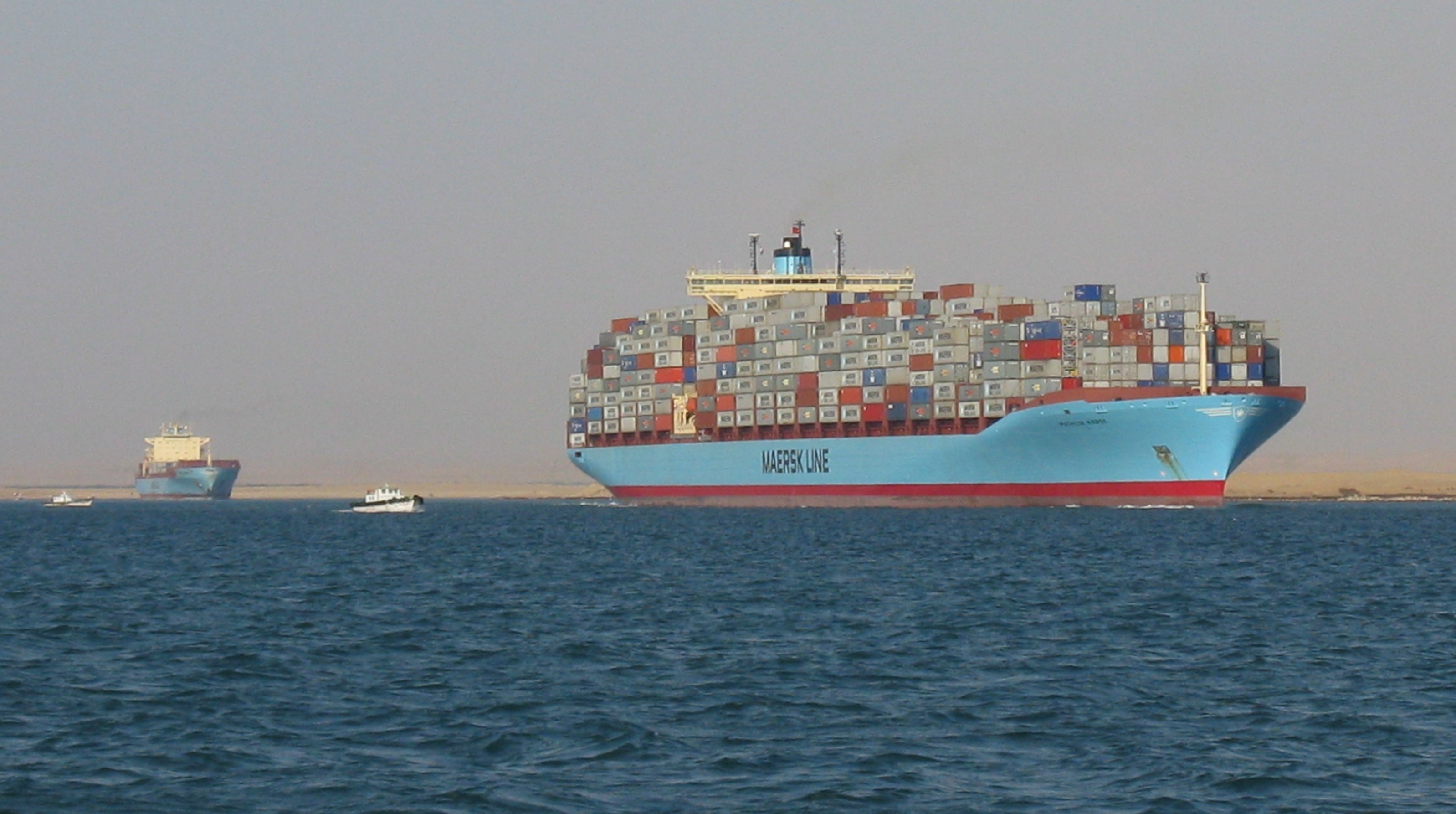
All eyes have been on Maersk in recent weeks as the Danish company committed to routing its Middle East-Mediterranean (ME11) service through the Suez. As of 10 February, the Suez Canal Authority (SCA) confirmed that ‘ASTRID MAERSK’ completed its first transit through the Suez, the first of the ME11 service to be rerouted through Suez instead of around the Cape of Good Hope. The successful transit of ‘ASTRID MAERSK’ is a key marker for the industry, as many consider the merits and risks of resuming service routes through the Red Sea.
The SCA appears optimistic about a continued increase in traffic through the canal. SCA Chairman Admiral Osama Rabie purports that the final quarter of 2025 marked the start of the gradual return to the Suez Canal shipping route. The SCA reports a 9% rise in vessel traffic in the fourth quarter of 2025 and an 18.5% increase in revenue in the first half of the 2025/2026 fiscal year. There has also been a slight increase in Suez Canal transits in early 2026 compared to the same period last year. This small increase must be viewed alongside the current state of relative calm in the region. Over three months have passed since the last recorded Houthi attack on vessels in the Red Sea. Despite this, traffic through the Suez Canal remains 60% lower than in November 2023.
CMA CGM was the first large shipping carrier to initiate a return to the Suez in late 2025, with ‘HELIUM’, ‘JULESVERNE’, and ‘BENJAMIN FRANKLIN’ successfully transiting the canal during November. However, in late January 2026, CMA CGM reversed its decision to return to the canal, rerouting three lines of service back around the Cape of Good Hope. The French company reported the reversal was due to increased geopolitical tensions. This abrupt U-turn demonstrates a primary concern of many cargo carriers: that while the Red Sea passage is currently the safest it has been in two years, the situation remains volatile. Any vessels transiting the region remain vulnerable to sudden changes in the security environment.
Outlook
As of late January, some carriers have deemed the Red Sea passage “too risky”, citing the prioritisation of crew safety and have indicated a commitment to the Cape of Good Hope route until regional tensions have substantially de-escalated. Others are likely to hold back and let Maersk’s ME11 service test the waters, so to speak. Maersk appears to be willing to lead that charge, as the company has indicated that two of its Asia-Europe services may also be rerouted through the Suez in the near future.
Despite the current decreased risk with transiting the Red Sea, the majority of global carriers appear hesitant to commit to returning to this route. This exercise of caution likely stems from several factors, including the risk of the resumption of Houthi attacks on short notice, the geopolitical instability of the wider region amid destabilising factors between Iran and the Trump Administration, and overall concern for crew safety. The coming months are likely to reveal a gradual resumption of vessel traffic through the Suez Canal as the route’s safety is assessed on a case-by-case basis. There is a possibility of increased shipping partnerships to reduce direct risk where possible. Additionally, some carriers may also opt to divide services between the Suez Canal and the Cape of Good Hope. A full-scale return to pre-2023 usage of the Suez Canal is unlikely to materialise within the coming months.